November 14, 2014

Guns, Germs, and Steel by Jared Diamond (An Analytical Summary/Review)

Analytical Summary:

In grade school, educators teach about imperialism–one country extending its hand into another to take power or influence. Imperialism was especially prevalent throughout the 19th and 20th centuries, such as the Open Door Policy in China at the turn of the 20th century. Rarely is it considered how especially influential countries gained their power in the first place. Jared Diamond dives deep into this concept of cultural dominance in his work Guns, Germs, and Steel. One of Diamond’s main points is that European dominance is due to the geographical location of the Earth’s earliest people. He explained this success as not due solely to geography itself, but what that geography allowed to arise for our earliest ancestors – agricultural success as well as the ease at which innovation and ideas flowed from population to population. Though Diamond’s two major points were valid, he neglected to mention two important factors that played a huge part in Europe rising to power, namely coincidence and culture.

Diamond’s arguments make a lot of sense. From the very title of his account, he presents his most relatable argument – Europe has dominance over the world because of their effective use of guns, germs, and steel. From the very first chapters of his book, he dispels the racist argument that Europeans were simply more competent than non-Europeans and therefore European innovation and culture could further take over. Rather, Diamond points out that the geographical location of certain nations was an indicator of supremacy in those nations. However, sheer size and location of a civilization alone is not a telltale sign of future superiority. As a counterexample, Diamond considers the African continent; if superiority did depend solely on geographic size and location, Africa would be the superpower of the world. Rather, Diamond explains that it is specific aspects of geography that lead to more widespread influential power of a nation.

Agriculture is an important aspect of geography that determines a civilization’s influence on other nations. As figure and table 5.1 show, the origins of food production began in developments that were highly influential at one point, such as China, the eastern United States, and the Fertile Crescent. Another geographical detail is the length of the horizontal axis of the continent in which a society exists. Because Africa and South America have such long vertical axes, any group settled on this continent would struggle to spread ideas. Diamond’s idea is that those continents with longer horizontal axes are better suited to the spreading of innovation because they are in similar environments. As a result of this, the climate is more consistent in two societies of the same latitude than those of the same longitude. The idea of a longer horizontal axis leading to an easier spreading of innovation on a continent links with agriculture as well because crops and animals can dwell in similar environments. Diamond explains that using both agriculture and axis relation acts as a sort of catalyst when diffusing ideas–the more surrounding civilizations adopt an idea, an increased number of civilizations will further adopt said idea. The influence grows exponentially, thus giving the original civilization more strength and power on a continental, and eventually, a global scale.

While Jared Diamond’s ideas are clear and easy to accept, there are more ideas that are just as impactful, though he chose not to include them. First, there is the role that the culture of a people as a whole plays on their impact on the world. For example, the Orient tends to think of the individual as a subordinate member of a bigger, more important group. Therefore, individuals within the Orient tend to be submissive to the larger, more important whole, resulting in a lack of outright creativity that tends to be necessary for innovation. In contrast, the Occident sees the individual as very important. They see the individual diversity within the group as something that gives their societies an advantage in cultural dominance compared to their eastern counterparts. Compare two countries with similar geography (with regard to longitude), one from the Orient, China; and one from the Occident, the United States of America. In this comparison, it becomes clear how much culture affects domination and spreading innovation. China has not developed much further in the past few decades and has a spirit of contentment with older traditions compared to the United States. The United States is rarely content with the present and is always looking for the newer, seemingly better thing, rewarding the individual who invents the next best thing with both fortune and fame.

Diamond does mention China having its power being taken over by western cultures in chapter 20, but claims China slowed its development down because of political unification. Rather, this vast difference between the United States and China – as well as most Oriental and Occidental societies – is caused by religion, something only briefly mentioned by Diamond in Guns, Germs, and Steel. One of the main influences on a society’s culture is religion. The emphasis on being submissive and content that appears in many Asian cultures is because of the most popular religions there. One of the fundamental principles of Taoism is being content with life the way it is. One of the four steps in Buddhism is eliminating pain through eliminating desires. The people of the Orient are fundamentally taught that contentment leads to happiness and exaltation. Therefore, innovation is rare in the Orient because everyone is content with what they already have. Compare that with the Occident, where Christianity is about us being saved through Christ’s mercy, good deeds, and undying faith – a very individualistic approach. The religious aspects of different societies were only touched on by Diamond, when they had a much greater effect on cultural dominance than many of his larger points.

Diamond also neglects to mention the power of sheer coincidence in cultural supremacy. Diamond admits that most of his points do not prophesy which nation will overshadow the rest, but he also does not give the credit to chance, which it deserves. We see chance rear its head and dictate who gets what power throughout history. One very recent example is that of the presidential election in 2000 between George Bush and Al Gore. Bush got elected as the Executive of the United States by a small enough margin that his success over Gore’s in the election is usually seen as luck of the draw. However, those years that Bush was in office were arguably some of the most crucial in recent American history–terror struck, war broke out, and our culture as the United States changed. It poses an interesting question–what if Al Gore had become America’s Chief Executive instead? Would our country still be such a massive superpower? As this is a hypothetical exercise we cannot talk in absolutes. However, it shows that sheer chance does play a huge role in a nation’s cultural dominance. It may, perhaps, be an even bigger than those mentioned in the book. Diamond is valid in giving credit to geography, agriculture,  and domestication. However, the fact that most of these things occurred together in the right environment is due to chance, and Diamond does not mention it.

The points made by Jared Diamond in Guns, Germs, and Steel are valid and true. He makes it clear that cultural dominance and the appearance of technology did not occur for purely biological reasons, but claims that societal dominance has generally been influenced by geography in one way or another. It is valid that Diamond’s reasoning does go back to this main idea, and his arguments for geography are both well written and explained. However, Diamond’s argument is found to be lacking when he fails to clearly outline that both culture and chance were also large contributors to European domination today.

November 09, 2014

Patience is a Virtue (Book of Mormon - Week Ten).

Well hello there! This week, we talked about a lot of different things in my Book of Mormon class. Most of it was simple logistics or lots of academic-related stuff that I don't really feel like writing about. But, we did talk about one chapter that many of you probably claim as your favorite! Jacob 5 is amazing. It's also really long - reading it before class, I rushed through it, not going to lie. But when we dove deep into the chapter and connected it to our lives, I found my heart softened for the first time in a while, and the Holy Ghost touched me so that I could hear the answers to even the most silent of my prayers.

I guess I should give you a little bit of personal background here - it's been a hard week or so. Mostly with myself. I don't want to talk too much about it, I don't want any pity, and I don't need any cookies or hugs or anything arriving at my dorm room door (though I would be pretty okay if you did want to send me a care package;)) but it has made me feel better to ask for help with some of it and put it out there. Anyway, here it is: I'm a perfectionist and have always set ridiculously high expectations for myself. That's always been the case, and probably always will be. And honestly it's great! I achieve amazing things because of it. However, when I don't do extremely well, or falter somewhere else, I kill myself with criticism. I don't really know how to put it all out in an organized matter, so please bear with me. Basically, I feel like a worse person now than I was this time last year - I have less energy to give to other people and not enough time to feed my inner introvert so that I can continue to deal with and even enjoy others. As a result, I've been sharp-tongued, prone to gossip, and just not very willing to give as much time and energy to others (I think because really I have less to give). Basically, I've been falling short in about everything I do, and for a perfectionist, that's pretty much a living nightmare. I'm especially sensitive right now, but it's totally fine - it's a trial that I'm going through and I'll be stronger as I endure it well and continue to work on everything with Heavenly Father's help. But yes, that's the background I'm coming from here.

So we're reading this super long chapter, and it's super cool. But then we get to Jacob 7, which is where Sherem is trying to convince people not to believe Christ or God or anything else that the prophets are saying. In verse 13, Sherem tells Jacob to "show me a sign by this power of the Holy Ghost, in the which ye know so much." And basically from that point, God smote him and Sherem began to preach good until he died the next day. But then, we remembered something from Matthew 12. Verse 31 says that "an evil and adulterous generation seeketh a sign." We wondered what the relationship between adultery and sign-seeking was. Then Brother Griffin pointed something out - both are looking for instant gratification. Both a sign seeker and an adulterer would say "I want what I want now with no work or consequence."

Okay so that's cool, yeah? But then this is where Brother Griffin's words started to touch me - in order to know that Heavenly Father is real, or that the Holy Ghost can really touch us, we need to first have faith, and then exercise that faith. Brother Griffin explained that gaining a testimony is a slow process, much like growing an olive tree (tying it back to chapter five - hollaaaa). We have to be patient. And this is where I started to really feel enlightened - I can't be perfect in a day. The sorts of habits I'm trying to establish in myself can't be done in a day, or even a month. In order to get where I want to be, I need to be patient with myself. I need to always try, stick to my goals, and soon enough I'll get there. Maybe I'll fail sometimes, but as long as I'm improving, does it really matter?

The same goes for you. As long as you're setting goals, working towards them, and asking for Heavenly Father's help, you're golden. Don't expect him to make you the person you're supposed to be overnight, be patient with him, yourself, and others.

November 02, 2014

Mormons and Polygamy (Book of Mormon - Week Nine)

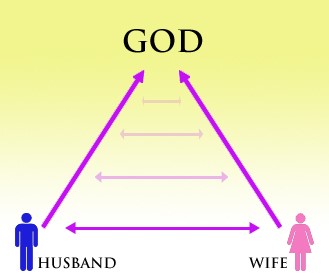
So hey let's get down into the nitty gritty: polygamy. It's an ugly word to most people, sometimes seen as an ugly thing in the history of the church. But it happened. And honestly, we shouldn't be ashamed of it. For those of you who do not know, members of the Church of Jesus Christ of Latter-Day Saints no longer practice polygamy, but there was a time that they did. It wasn't because they wanted to have sex with a bunch of different women - there was nothing weird or sexual about it. It was done to raise righteous seed - men would marry women and they would be sealed together. The sealing keys were used horizontally, not vertically. Polygamy was practiced in the LDS Church from 1831-1890.  It was revealed to Joseph Smith in 1831 after a prayerful inquiry about it. If you want to see the actual revelation, click here.

In class, we started talking about polygamy because of some readings we did in Jacob 2, when the law of marriage was revealed by the Lord (I believe it was through Jacob?). In verse 27, He says "For there shall not any man among you have save it be one wife; and concubines he shall have none". So, just reading this, you might say, 'Joseph Smith got the wrong revelation! Who does he think he is?' However, in verse 30, it says "raise up seed unto me, I will command my people; otherwise they shall hearken unto these things." This means that the Lord explained the law of marriage as He would have it, but if something needed to be changed, He would command His people. And Joseph Smith was commanded!

The thing is though, polygamy was commanded to Joseph Smith, and he didn't want to reveal it. He knew how frowned upon it was. He knew that there would be some to pervert the nature of it. In fact, Joseph Smith even withheld the revelation for a while because of his fear. But an angel came to him after it had been revealed to Smith and basically told him that if he didn't reveal the revelation he had received about polygamy, he would be replaced. So he revealed it. It's even said that Brigham Young - a notorious polygamist - dreaded the commandment of practicing polygamy, according to Mormon Newsroom (also, this article super rocks, I recommend it if you're curious about polygamy).

The biggest attack about Mormons and polygamy that I have heard involved Joseph Smith being sealed to a 14 year old girl. Let's get a couple of things straight - it's true, Joseph Smith married Helen Kimball at the very young age of 14. Also, let's make it clear that Joseph Smith did not have a sexual relationship with this young girl. Smith was sealed to Helen Kimball at the consent of her father, Heber C. Kimball. Why would they do this? Well, back in the early days of the church when the sealing power was first introduced, members weren't quite sure how it worked yet. It's clear that the prophet will make it to the Celestial Kingdom (think of it as LDS Heaven, though there's much more to it than that), so many people thought that if they got sealed to the prophet, they would also be assured a place in the Celestial Kingdom. By Heber Kimball asking Joseph Smith to get sealed to his daughter, Kimball thought he had assured his family a place in the Celestial Kingdom to be with Heavenly Father again. You gotta love them for their strong desire to do what the Lord wants for them, even if they don't know the details! I can't imagine Heavenly Father looking down, saying something like, "You fools! Obviously that isn't how you use my power." Rather, I like to think he looked down, laughed and said something like, "Well, you gotta love the enthusiasm! Let's show them how my keys are supposed to be used."

Anyway, in 1890, while Wilford Woodruff was the prophet and president of the LDS Church, the United States government threatened Woodruff - if his church members didn't stop practicing polygamy, the LDS temples would be taken from them. So Woodruff was stuck and needed to make a decision - would he give up temples, or polygamy? He prayed, and it was revealed to him that the LDS members would stop practicing polygamy and would keep their temples instead. Interestingly enough, in the next year (and a bit), children began to be sealed to their parents - the sealing keys began to be used more vertically, and less horizontally.

Why does this matter to you? If you're a member of the church, it explains polygamy so you can be less ashamed of the history of the church. If you aren't a member, maybe this helps you understand how Mormons view polygamy now, and why we practiced it in the first place. I know it was really nice for me to know. If you have any questions, don't hesitate to ask! Don't take any of that anti-mormon stuff for more than a grain of salt. A primary source is always more accurate than a secondary.

October 27, 2014

Bibla - The Little Library (Book of Mormon - Week Eight)

What is the biggest issue traditional Christians have with Mormons?

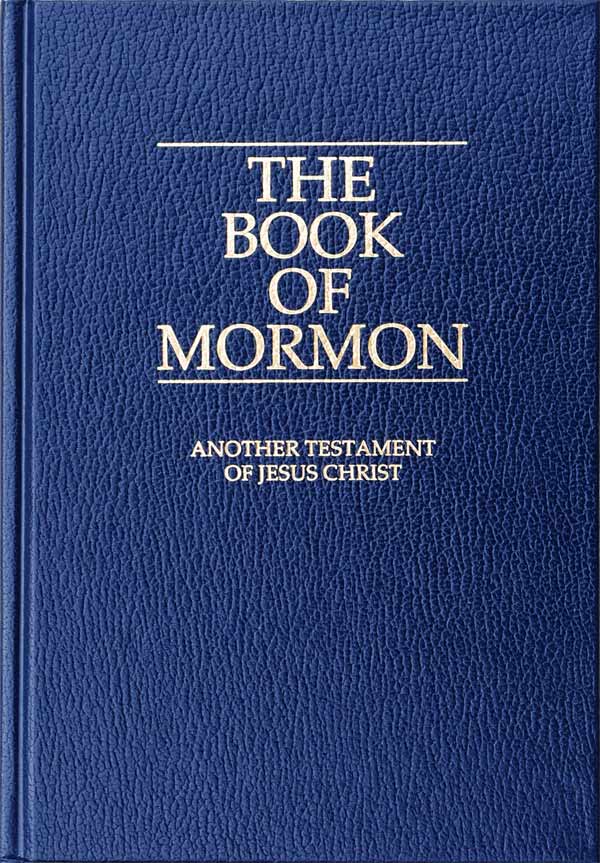
I mean, okay, yeah there's lots of issues they have with us (most of which are misconceptions). But the very biggest? I'd venture to say that it's the fact that we have a "second Bible" - the Book of Mormon: Another Testament of Jesus Christ. It's totally understandable, honestly. If you believed God didn't speak anymore (that's one I would find so hard to accept personally), then why would He present another scripture?

But here's the thing - God does speak. He also speaks to individuals. Have you ever had one of those days that you were knocked down to your knees because you didn't know who else to turn to? I know I have. Tell me, have you ever felt better afterwards? Someone might have come up to you and said just the right thing to help make your day better or solve your problem. That was Heavenly Father's way of telling you He loves you. Whether it is done by Him or by His servants, it is the same (D&C 1:38). Why would God just suddenly stop talking? If He loves all of His children, He would guide all of them through to the very end, not just give a single book of answers and say, "well, I guess that's sufficient". God does not love us a sufficient amount, He loves us more than we can ever imagine. His love is unfathomable - so it only makes sense that He would guide us all until the very end. He knows you by name and loves you more than you could ever know!

In 2 Nephi 29:3, Heavenly Father speaks, saying "many of the Gentiles (and also people in our day) shall say: A Bible! A Bible! We have got a Bible, and there cannot be any more Bible."

Maybe you're reading that, saying "Yeah it makes sense. Nothing else needed to be outlined."

But then, look at the word Bible. The word derives from a French word - "bibla," meaning "library." Take that a step further - the Oxford English Dictionary (ooh, fancy) defines the word "bible" as "little library." Even further now! Think about how the Bible was assembled. Way back in the day, all scripture was held in the temples. There were tons and tons of scrolls, plates, papyrus, what have you. Then time passed, and they decided that they wanted a book. So, they took a bit of everything, making a little library of what could be found at the temple.

"A little library! A little library! We have already got a little library, and there cannot be any more little library." Now, doesn't that sound a bit foolish? There's more works there! Who wouldn't want more books in their library?

God goes on, saying in verse 7, "Know ye not that there are more nations than one? Know ye not that I, the Lord your God, have created all men, and that I remember those who are upon the isles of the sea; and that I rule in the heavens above and in the earth beneath; and I bring forth my word unto the children of men, yea, even upon all the nations of the earth?" The Book of Mormon is Christ's account in the Americas. The Bible is mostly in the Middle East. I personally believe that there are perfectly valid scriptures from many lands, even more than just the Middle East and the Americas. Please know - that is my belief, not the LDS Church's belief necessarily. For example, I feel the Tao Te Ching is great scripture - I have felt the Holy Ghost reading that. But that's a discussion for another day.

I know that the Book of Mormon is true scripture, great to add to your "little library" (see what I did there?). I know that God still talks to His children, both individually and personally, but also through His prophet. I have read the book, prayed about it, and can testify that God gave me an answer. I know of its truth. I invite you to do the same!

October 20, 2014

Holy, holy, holy! (Book of Mormon - Week Seven)

No lie, this week's post will be much less spiritual, and much more about interesting things learned this week, mainly because I didn't find any extremely life-changing words this week in lecture today. We're mostly focusing on history and dissecting the poetry that is Isaiah's writings. He's one tough cookie to understand (though his words are touching).

The most interesting thing I learned this week involves Isaiah's use of repetition. It's throughout the scriptures everywhere, so I figured it'd be good to share with y'all. It's already upped my scripture study.

In 2 Nephi 16, Isaiah is having a vision, and sees one seraphim (if I'm understanding this right - Isaiah is a little confusing) say unto another "Holy, holy, holy, is the Lord of Hosts; the whole earth is full of his glory" (2 Nephi 16:6). But why does he say it three times? Well, apparently, three is a superlative and holy number, and is highly symbolic to Isaiah and many Biblical writers. It gives a lot of emphasis to what is being said, and it is the supreme number to them. Don't ask me why, because honestly I'm not sure. If anyone would care to shed some light on the subject i the comments below, please do. But anyway, that shows that when something is repeated three times, it's something to pay attention to. Oftentimes in the scriptures, "Wo! Wo! Wo!" or something similar appears. To me, this means to slow down and really pay attention to why this word is being repeated, because it means their action/attitude/whatever is being spoken about is a big deal.

This divine number that is the number three shows its importance in other aspects of our religion as well as others. Look at the three members of the Godhead, the three degrees of glory, and the three days that passed before Jesus was resurrected. Three shows its face throughout religion.

The Gilbert, Arizona Temple (© Photo courtesy of John Power. All rights reserved.)
Specifically in the Church of Jesus Christ of Latter-Day Saints, we use the number three as a superlative without even realizing. For those of you who don't know, we have temples - which are houses of the Lord on this earth - that we dedicate to the Lord when they are done being built. I won't give lots of detail about temples, just because I honestly can't tell you much more than what I have - I haven't gone through the temple yet and couldn't give an explanation better than this one. But anyway, at these temple dedications, we do this thing called the "hosanna shout." We take a white handkerchief, and while waving it, say in unison "Hosanna! Hosanna! Hosanna! to God and the Lamb!" three times, ending with "Amen! Amen! Amen!" Yes, it is a little odd, but it is what it is. It's our traditional way of praising God and setting the temple apart to the Lord. The fact that it is a marvel and a wonder is beside the point. The point is, we repeat this phrase three times. We ask "hosanna" three times, and end with "amen" three times. (For the record, this isn't a secret, you can read about it right here). That aspect of the temple lifts up and makes holy to us what is being repeated - praises of joy, to God and to Christ and to His Atonement, Amen! that it can be dedicated properly and be good enough to be called a Heavenly home on earth.

 Maybe we should pay more attention to the number three. I'm very curious as to how the number lost its meaning in our day when it was the superlative back in Biblical times. Paying attention to this number and knowing it was - and still should be - significant has changed my scripture study and other aspects of my spiritual life, and I think it'll do the same for you.

October 13, 2014

"O Wretched Man That I Am!" - 2 Nephi 4 (Book of Mormon - Week Six)

This week, I discovered my absolute LOVE for 2 Nephi 4. This chapter answered prayers that I couldn't find the words to utter aloud. I guess this chapter tends to be referred to as either the Lamentations or Psalm of Nephi, and I now understand why. This chapter talks about Nephi's weaknesses - he is tempted, and those temptations "easily beset him" (2 Nephi 4:18). He talks about his feelings about himself because of iniquities - "when I desire to rejoice, my heart groaneth because of my sins," but goes on to speak of his Lord - his sole reason for continuing on fighting hard (19). There's so much I want to talk about with this. I feel like everything Nephi felt and the pleading with the Lord done here is how I feel often. I always desire to be so much more, and so much better, yet the simplest, silliest temptations are what tend to get me and take me farther away from my Lord. Nevertheless, I keep trying, and the Lord continues to motivate me to try, and I progress. Slower than I want to, but I still progress. I never highlight in my Book of Mormon saved for lecture, only in my set at home. But I couldn't help myself with this chapter - I highlighted everything.

I feel like if you just read the chapter as I did in personal study, you'll be able to feel Nephi's emotions just as I did and know that everyone falls short - even one of God's most beloved prophets. It is through the enabling power of the Atonement that any of us can make it back to our Heavenly Home. So, although that was the most powerful thing I attained from this chapter, I'll let you do that on your own. I want to talk about what we discussed in class with this chapter - the fail-proof step-by-step guide to recovering from a bad day. Here we go:

Step One: Have righteous desires.

Before even mentioning his weakness, Nephi speaks of his desires - "upon these I write the things of my soul...For my soul delighteth in the scriptures, and my heart pondereth them, and writeth them for the learning and profit of my children. Behold, my soul delighteth in the things of the Lord; and my heart pondereth continually upon the things which I have seen and heard" (2 Nephi 4:16-17). If your desires are good, you'll fall short less often. Sure, the pathway to hell is paved with good intentions, but even having good intentions is better than having none, and good intentions is just the first step. You cannot move on to bigger and better things if you don't know what bigger and better things you want or why you want them.

Step Two: Know your personal weaknesses.

From verse 17, Nephi goes on, saying, "Nevertheless...my heart exclaimeth: O wretched man that I am! Yea, my heart sorroweth because of my flesh; my soul grieveth because of mine iniquities. I am encompassed about, because of the temptations and sins which do so easily beset me. And when I desire to rejoice, my heart groaneth because of my sins..." (2 Nephi 4:17-19) Although Nephi does not tell us straight out what it is he struggles with, he makes it very clear that he does have his struggles. My last blog post talked about how we should look at out weaknesses. I think Nephi sees his weaknesses properly. He is humble and submissive because of them. What are your weaknesses? How do they make you unhappy? What do you want to do about them?

Step Three: Remember why you should stay strong.

Don't you love the word "nevertheless"? I never really noticed it until we studied it so in-depth this term! Nephi follows his lamentation with this word "nevertheless", meaning, "despite all of that". He says, "nevertheless, I know in whom I have trusted. My God hath been my support; he hath led me through mine afflictions in the wilderness; and he hath preserved me upon the waters of the great deep. He hath filled me with his love, even unto the consuming of my flesh (meaning "my worldly desires disappear")...he hath heard my cry" (2 Nephi 4:19-23). It's easy to get into a pity party when you forget the point of it all and forget that you have a God who loves you so much, knows your afflictions, and simply asks that you follow him and always improve, and He'll give you strength and blessings and mercy and pure joy unfathomable otherwise. Always remember Him.

Step Four: Count your blessings. Do what is right.

This totally goes hand-in-hand with step three. Nephi goes on through all of these "he hath" phrases from verse 20 through verse 25 (I mentioned some of them above, so I won't type out any more) talking about how blessed he is. Heavenly Father hears Nephi's cries and gives him protection and love and knowledge. Nephi does all he can to overcome temptation, and in exchange, the Lord gives him a boost and affirms that he is doing the right thing. Make goals. Always strive to be better. Keep your priorities straight. Work hard during the day and then cry aloud on your knees. Do all you can, and then stay positive and happy. If you're always looking at the negative, then negative is all you'll see. Look up.

Step Five: Re-evaluate the big picture.

From here, Nephi starts looking again, and asks questions. "O then, if I have seen so great things, if the Lord in his condescension unto the children of men hath visited men in such mercy, why should by heart weep and my soul linger in the valley of sorrow, and my flesh waste away, and my strength slacken, because of mine afflictions?...why should I give way to temptations, that the evil one have place in my heart to destroy my peace and afflict my soul?" (2 Nephi 4:26-27). Once you realize that your temptations and weaknesses come from man or from evil, you'll start to realize that your sorrow is so much less than your blessings. And then there is room for epiphany. 

Step Six: Re-convict yourself.

Here's where my heart just leapt, remembering the first moment I felt a re-conviction to the Lord. "Awake, my soul! No longer droop in sin. Rejoice, O my heart, and give place no more for the enemy of my soul...O Lord, I will praise thee forever" (2 Nephi 4:28, 30). If you thought you had righteous desires before, just you wait until you feel a re-conviction to the Lord. This feeling makes you realize just how strong your God is, and through Him, how strong you can become. It makes you never want to sin again, and it is the most comforting feeling in the world - because of your God, nothing will bring you down.

Step Seven: Plead to the Lord for strength.

This is where I always fall short - I would end my recovery with re-conviction. But Nephi goes on, asking the Lord to protect him and keep him from ever giving in to temptation again. "O Lord, I have trusted in thee. And will put my trust in thee forever. I will not put my trust in the arm of flesh...cursed is he that putteth his trust in man or maketh flesh his arm." (2 Nephi 4:34). To stay strong, you have to tell the Lord in prayer what you will do and what you need from Him - make a covenant with Him.

Step Eight: Always bring it back to your testimony.

"Yea, I know that God will giveth liberally to him that asketh. Yea, my God will give me, if I ask not amiss; therefore I will lift up my voice unto thee; yea I will cry unto thee, my God, the rock of my righteousness. Behold, my voice shall forever ascend up unto thee, my rock and mine everlasting God. Amen" (2 Nephi 4:35).

October 06, 2014

Making Weak Things Strong - 2 Nephi 2 (Book of Mormon - Week Five)

            So I know this post is a late one – last week and this week are by far my most busy weeks, so forgive me!
            Last Wednesday, we had another amazing class. We mostly studied 2 Nephi 2, which is basically Lehi talking to Jacob and blessing him (I think it’s Lehi? Don’t quote me on that). The chapter starts out, saying, “in thy childhood[, Jacob,] thou hast suffered afflictions, and much sorrow, because of the rudeness of thy bretheren [Laman and Lemuel]. Nevertheless Jacob, my firstborn in the wilderness, thou knowest the greatness of God; and he shall consecrate thine afflictions for thy gain” (2 Nephi 2:1-2).
            It always bothered me when people said that our afflictions were a blessing from God. It’s hard for me to believe in a God who would say, “hey, I love you, so let me make your life worse.” Most of my most scarring afflictions were not from God at all, but from man through agency, in some cases, even my own. If we have the power to choose, it doesn’t make sense that God was behind it the whole time. But that’s not what is being said here. His afflictions are not blessings, necessarily, or even from God, but simply stated as for his gain.
            We all struggle with something. Even one of the most beloved examples in the Book of Mormon, Nephi, struggled (I’ll be writing about 2 Nephi 4 where we learn about Nephi’s struggles later this week). Brother Griffin told an amazing story that touched my heart. It was about a man who struggled. He was amazing, and worked very hard. But his thoughts wandered a lot when he saw scantily-dressed women. He always tried to control it, begging God to take his weakness from him, and tried to pull his thoughts back without harm. He always figured that he would just get married and grow out of it, but to no avail. It got to the point where he was retired, and wouldn’t go out shopping with his wife because he knew that seeing the ads would make his mind wander. However, one day, he did, and just stayed in the car while she went inside and shopped. A young woman walked by, and the old man turned awa
y, his thoughts wandering. He cried aloud “Oh God, wilt thou take mine affliction away and make me strong against this silly temptation? Haven’t I suffered long enough?” He then heard a voice in his mind, which said “I will not take it away, for through thine weakness, thou comest unto me.”
            And then I thought. There are things I struggle with. I think we all have personal temptations that we hesitate to talk about, hoping to contain our demons. How often have I cried, “Oh God, wilt thou take this away from me?” But no, He will not, because without it, we would have no reason to come unto Christ and use His Atonement.
This relates to Ether 12:27, a pretty popular favorite for most. “And if men come unto me I will show unto them their weakness. I give unto men weakness that they may be humble; and my grace is sufficient for all men that humble themselves before me; for if they humble themselves before me, and have faith in me, then will I make weak things become strong unto them.”

Your weaknesses come from your natural man, but they are not necessarily bad. Though they are not God-given, they bring us unto the Savior and make us kneel down at his feet.